

How the People of Nuh Predicted the Modern Da’wa Scene
بسم الله الرحمن الرحيم
In the Name of Allah, the Most Gracious the Most Merciful
The life of an Islamic da’ee (preacher) is one of sacrifice and patience. Prophet Nuh عَلَيْهِ ٱلسَّلَامُ demonstrates this, who preached for almost 10 centuries for the sake of Allah while facing rejection and opposition.
An overlooked point is why the people of Nuh rejected their prophet - his lack of popularity. The people’s understanding was that a preacher needed to be famous, wealthy and in the company of the rich.
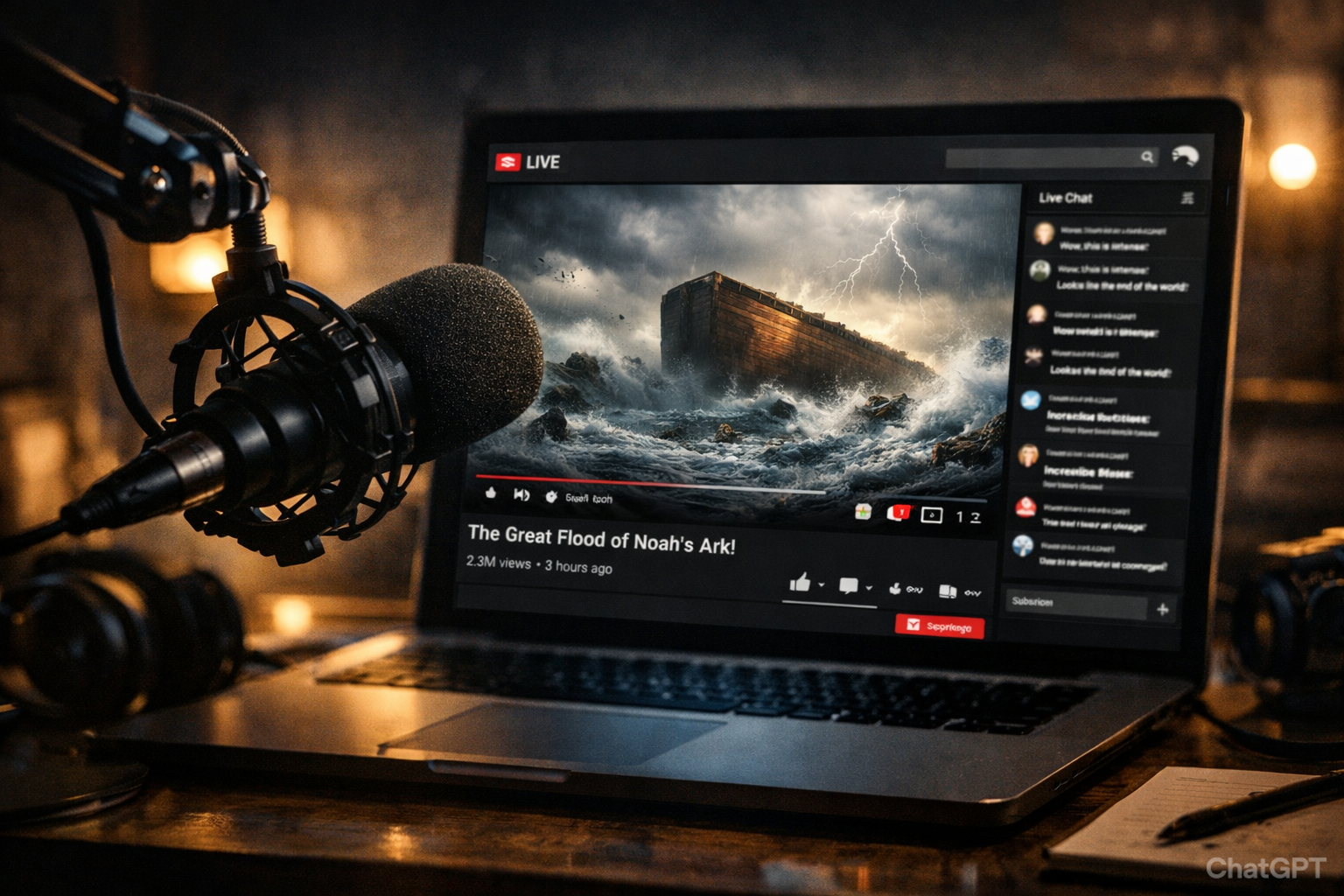
Due to the rise of social media, this mindset has become prevalent in the contemporary Islamic da’wa scene. A new celebrity culture has emerged - turning da’ees into influencers who are expected to attract crowds and donors through online popularity.
This article looks at the mentality of the People of Nuh عَلَيْهِ ٱلسَّلَامُ and the parallels within the modern da’wa scene.
The Call of Prophet Nuh عَلَيْهِ ٱلسَّلَامُ
Prophet Nuh عَلَيْهِ ٱلسَّلَامُ was the first messenger to the people of the world. He is part of the five greatest prophets in Islam. He was sent to a tribe in Mesopotamia (Iraq) who worshipped idols - the most famous being Wadd, Suwa', Yaghuth, Ya'uq, and Nasr. For 950 years, Prophet Nuh عَلَيْهِ ٱلسَّلَامُ preached to them to abandon their idols.
Nuh proclaimed, “O my people! I am truly sent to you with a clear warning.
Worship Allah ˹alone˺, fear Him, and obey me.
Prophet Nuh عَلَيْهِ ٱلسَّلَامُ was persistent in his call to the people. He varied his methods, taking advantage of every resource. He adjusted the times, places and the groups he spoke to, showing the need for da’wa to be flexible.
He said: My Lord I called my people night and day.
Then I certainly called them openly, then I surely preached to them publicly and privately,
However, the more da’wa he gave the people ran away from him.
And whenever I invite them to be forgiven by You, they press their fingers into their ears, cover themselves with their clothes, persist ˹in denial˺, and act very arrogantly.
The Rejection of the Elites
After 950 years, only a few embraced Islam from the weak and the poor. This led to the wealthy and political leaders confronting Prophet Nuh عَلَيْهِ ٱلسَّلَامُ:
The disbelieving chiefs of his people said, “We see you only as a human being like ourselves, and we see that no one follows you except the lowliest among us, who do so ˹hastily˺ without thinking. We do not see anything that makes ˹all of˺ you any better than us. In fact, we think you are liars.”
Prophet Nuh responded by addressing the expectation that an Islamic preacher needed wealth, prominence and status to be followed.
O my people! I do not ask you for a payment for this ˹message˺. My reward is only from Allah.
He also dismissed the notion that his followers needed to be from the high class.
O my people! Who would protect me from Allah if I were to dismiss them? Will you not then be mindful?
This showcases that a da’ee should not seek financial compensation for his work, which is for Allah’s sake. Similarly, they don’t require great wealth for their message to succeed.
I do not say to you that I possess Allah’s treasuries or know the unseen, nor do I claim to be an angel, nor do I say that Allah will never grant goodness to those you look down upon. Allah knows best what is ˹hidden˺ within them. ˹If I did,˺ then I would truly be one of the wrongdoers.”
The response of Prophet Nuh عَلَيْهِ ٱلسَّلَامُ establishes the value of an Islamic preacher and what their priorities are. However, in the contemporary age the role of an da’ee has been altered by social media, which provides its own set of expectations.
The Modern Dawa Scene: Rise of Celebrity Imams
Previously, the life of a da'ee was one of simplicity. They lived in humble conditions in their community which they preached to. Their task required personal sacrifice, knowing the reward would be from Allah. A da’ee wasn’t expected to be wealthy or powerful, like the Prophets of Islam they simply delivered the message to those who needed it.
Social media and influencer culture has changed the landscape of the da’wa scene. There has been a phenomenon since the late 2010s of celebrity imams who can sell out venues through internet virality. Their value is no longer their message, but their personal brand which carries wealth and prestige. While having popularity or wealth is not by itself blameworthy, the modern da’wa industry prioritises preachers who can generate income through status.
Islamic da’wa has become a business. An imam or scholar cannot book speaking slots at big events on the basis of their message. They must double as influencers - measured by social media followers. They need to draw high engagement, and constantly grow their audience. This gives them marketing value which Islamic organisations utilise to draw crowds. Their name fills masjids, sells out halls and boosts ticket sales.
Arguably, turning da’ees into personal brands eclipses the quality of their message. Muslims no longer attend events for the lecture but its viral speaker. When the talk is finished, they have lost interest. Though a popular speaker can be sincere in their message, the da’wa scene risks sidelining local imams with strong knowledge but little online reach. As a result, Islamic spaces are filled with influencers and motivational speakers who lack Islamic knowledge. This impacts the quality of the da’wa.
Do Algorithms Influence Islamic Da’wa?
Social media’s rise has led to the creation of the algorithm. Its role is to either boost or censor content, leading to an environment where users have to appease it.
Due to its ability to make or break careers, online da’wa preachers aim not to be ‘controversial’ or risk being censored by the algorithm.
Consequently, important topics are sidelined and the da’wa space becomes cluttered with those unable to address vital political and social topics. The ones who suffer are the youth, who don't fully benefit from mainstream da’wa.
Similarly, local da’ees who discuss these hot topics are often censored on social media. This is why Islamic organisations should boost these important speakers, whether popular or not. Our goal should be to protect Islamic knowledge and ensure it reaches the masses.
To be clear, da’wa on social media is not problematic, but algorithms shouldn’t control the quality of the message. All Islamic knowledge must be protected from online trends and the pursuit of virality.
From Masjids to Private Arenas
As mentioned, the modern da’wa scene has become a business. It functions to appease donors, sell tickets and protect its brand image. The corporatisation of da’wa has led to it becoming inaccessible to its most vulnerable followers - the poor.
Over the past few years, Islamic talks have shifted from the masjids to private arenas. As a result, attendees pay increasingly high ticket costs to gain entry,
Some can afford this, but this puts pressure on poorer Muslims who cannot. They are forced to choose between personal expenses or Islamic knowledge.
Da’wa is slowly becoming a commodity not everyone can afford - restricting access to wealthier communities.
In contrast, talks at the masjid are free and accessible to all. Any expenses would be subsidised by the community, removing the burden on individuals.
There has to be a return to utilising masjids for da’wa. To small knowledge circles and local spaces. Regardless of income, every believer deserves access to knowledge.
Booking private halls is not by itself an issue, but shouldn't be over-relied on for Islamic talks, it creates a financial hierarchy - harming poorer Muslims.
To counter this, Muslims must support their local imams and share talks online. Similarly, Islamic organisations need to be pressured to platform local speakers.
Young people can manage their masjid’s social media accounts. This helps small da’ees and imams reach wider audiences, removing the burden of self promotion.
Overall, we must return to the basics. A da'ee's value is in their message, which is calling people to worship Allah alone. Being universally followed, popular or financially successful is advantageous, but not a prerequisite to being heard.
The people of Nuh valued wealth and prestige over Islam. Prophet Nuh عَلَيْهِ ٱلسَّلَامُ emphasised authenticity over popularity. Given the fate of the people, we must heed the lessons from the Quran when giving da’wa on social media.
May Allah bring sincere da’ees who spread the word of Islam to all people, whether rich or poor.
Research Resources
JazakAllahu khair for reading. Please benefit the ummah by sharing this knowledge. Feel free to download this article for offline reading or consult the bibliography below.
-
Kamdar, I., 2025. Celebrity Imams – Have we lost our way? Islamic Self Help, 13 October. Available at: https://www.islamicselfhelp.com/2025/10/13/celebrity-imams-have-we-lost-our-way/.



Power is an addictive force. It transforms the weak into the strong, the average man into a warrior and a small village into a mighty nation. This was the case for the people of Ad but was also the reason for their downfall. In particular, their tribal chiefs rejected Prophet Hud عَلَيْهِ ٱلسَّلَامُ, and lead a hostile campaign to discredit him. But why were they hostile in the first place? What stopped Ad’s chiefs from engaging with their prophet and accepting Monotheism?