

Has Modern Education Killed Our Relationship With Learning?
بسم الله الرحمن الرحيم
In the Name of Allah, the Most Gracious the Most Merciful
At the heart of every civilisation is education. A society's capacity to flourish depends on people's pursuit of knowledge, yet modern education faces challenges on several fronts: overexamination culture, a decline in critical thinking, dependence on artificial intelligence and the rising cost of higher education. Studying is no longer about intellectual growth, but a means of obtaining employment. This has weakened our relationship with knowledge. This article examines the ways in which modern education has failed contemporary learners, reflecting on the purpose of education and the value of knowledge.
Examinations Over Potential: When Grades Replace Growth
How a student is taught shapes not only who they become, but how they influence and navigate the world. This is why education has a role in nurturing a child’s ambitions and cultivating their talents. A society which invests in and trains their youth will produce workers who build institutions, fuel industries, further learning and create a cohesive society which continually improves and develops.
At the centre of all this is believing every child can succeed. It was understood that one’s educational journey was a personal process. In earlier civilisations, a teacher's role was to facilitate the learning process. They provided mentorship, counselling and investment before a student's success was known. The focus was on what they could live up to, not who they were. As a result, encouragement and support was the most important factor.
In the modern world, a student’s potential is measured through examinations. They must prove their potential before they are invested in. This is shown when applying to university. A student must submit transcripts, personal essays, evidence of extracurriculars, and recommendation letters. This thorough vetting process is to ensure future candidates are academically suitable to study at an institution.
Rather than universities discovering their talents, students must already have accumulated enough experiences and credentials. When intelligence is limited to producing correct answers, it discourages - and even penalises - making mistakes. This contradicts the essence of learning. When developing a new passion, a student must embrace failure. Without mistakes, a learner can never acquire real skills. This was the mindset characterised by Thomas Edison, an American inventor. He stated:
"I have not failed. I've just found 10,000 ways that won't work.”
“When you have exhausted all possibilities, remember this - you haven't.”
“Nothing is impossible. We merely don't know how to do it yet."
This shows that true learner potential is built on the ability to make mistakes. The process creates new discoveries, produces innovators and scholars who can harness their own interest and talents to benefit society. Examination culture undermines this process by restricting the ways that potential can be developed.
The Erosion of Critical Thinking in Classrooms
Modern education has produced the notion that learning can only be pursued in an institution. In reality it is not confined to university or ends when you receive a degree. It’s a life long discipline and requires constant work and engagement.
In addition, education can take place anywhere. From sitting in a study circle with scholars, learning with a personal tutor to conducting independent research. The point of learning is to actively engage with knowledge, not passively receive information.
Successful learners are critical thinkers. They do not simply absorb knowledge but interrogate it. They exchange, challenge concepts and refine arguments through reflection. Learners are expected to read, compare sources and reconcile different viewpoints to ‘resolve conflicts and tensions.’ This makes them more introspective and ‘sensitive to discriminatory beliefs, in oneself, and in others.’ Critical thinking boosts a learner's moral values since they become responsible for the sources they dissect. This is an essential skill to have when solving problems, making decisions, and learning new concepts.’ (OECD, 2020, 1-2)
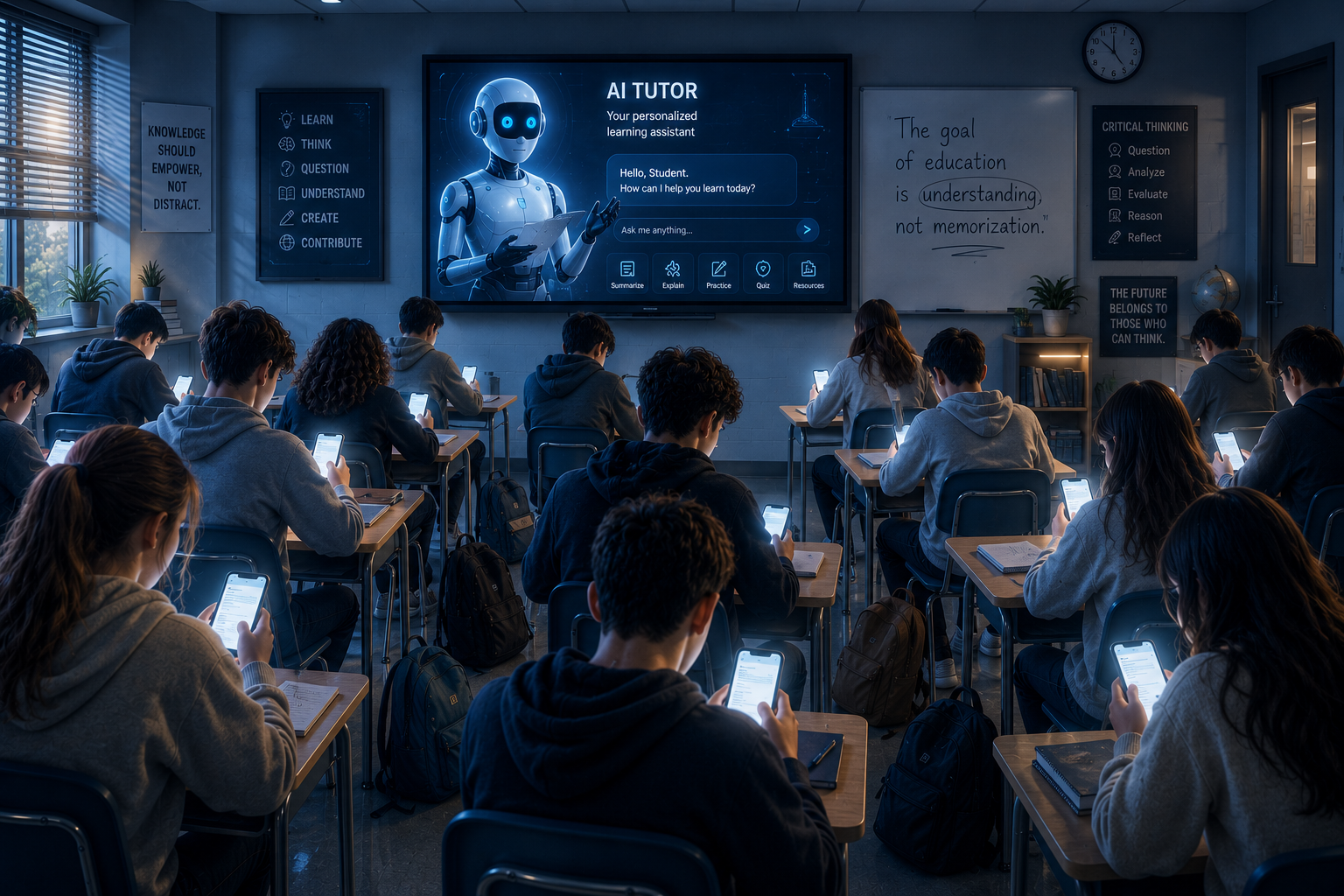
Most concerningly, critical thinking is declining under modern education due to artificial intelligence entering classrooms. In the UK, the government is rolling out AI tutors for 450,000 students, removing human interaction with a teacher. This creates a dependency on technology as students lose the support and mentorship coming from an educator. The use of AI also discourages young people from thinking or producing new ideas. Students no longer need to spell due to ‘voice to text technology.’ This reduces their core skills such as ‘thinking, creativity, writing and having a conversation.’ (Weale, 2026)
The Commercialisation of Education: When Knowledge Becomes a Commodity
Knowledge was never meant to be bought and sold. It should be shared, debated and passed through generations. Yet modern education has commodified learning by making educational opportunities dependent on financial power rather than intellectual curiosity. For example, the world’s most prestigious universities command enormous influence and often produce wealthy, powerful people. Graduates from Ivy League institutions such as Harvard, Colombia or Yale are often politicians, generals, journalists, professors and billionaire CEOs - the latter in which Harvard produces the most of. (Venditti, 2025)
This showcases how the American elite gained a social advantage where they
had access to powerful networks, mentors and opportunities difficult to replicate elsewhere. As a result students are encouraged not just to pursue knowledge but proximity to power.
Access to elite learning spaces come with a cost. Many graduates begin their careers burdened by debt. Tuition fees, maintenance loans and accumulating interest. This means that some borrowers—particularly those who pursue postgraduate study—can graduate owing well into six figures. (Mbriwa, 2026).
For graduates, education is no longer about intellectual discovery. Instead their future careers are used to repay loans. Their main concern is not to enter into public service, research or innovation for the sake of society but to find a well paying job to repay their debt. This limits a student's intellectual potential, creating barriers on pursuing scholarship with freedom and flexibility.
A true civilisation flourishes when knowledge is publicly accessible and not a private asset for a small view. Learning should never be a luxury reserved for those who can afford the highest tuition fees or secure prestigious institutions.
Sharing knowledge is one of humanity's greatest shared responsibilities and should be a priority. When it becomes too expensive to learn, it discourages a generation from being intellectually brave, and robs society of its brightest thinkers who never materialised.
Conclusion
The pursuit of knowledge is sacred. Access to learning spaces, receiving mentorship and developing critical thinking skills are integral to a student of knowledge. This is crucial to having a successful society, where the brightest minds gather to solve problems and think critically about the world. In order to do this, modern education must ensure students are adequately supported. All learners have the ability to live up to their potential. This is by replacing examination culture with mentorship, support, and easier financial access to higher education. This will help revive our relationship with learning, and cultivate future potential in which past civilisations thrived from.
Research Resources
Jazakallah khair for reading. Please benefit the ummah by sharing this knowledge and downloading a transcript below. Feel free to use it for your own research or personal study.
-
Mbriwa, M. (2026) ‘Basically, you’re trapped’: UK postgraduates burdened with double loan debt. The Guardian, 27 June. Available at:The Guardian (Accessed: 3 July 2026).
Sally Weale,(2026): ‘Pupils in England are losing their thinking skills because of AI, survey suggests’, Available at: The Guardian. (Accessed: 3 July 2026).
Thomas Edison Center at Menlo Park (n.d.) Edison Quotes. Available at:Thomas Edison Center at Menlo Park – Edison Quotes (Accessed: 3 July 2026).
OECD (2020) OECD Learning Compass 2030: Critical Thinking. Paris: Organisation for Economic Co-operation and Development. Available at: OECD Learning Compass 2030: Critical Thinking (PDF)
Venditti, B. (2025) The Universities Producing the Most Billionaires. Visual Capitalist, 6 October. Available at:Visual Capitalist (Accessed: 26 June 2026).
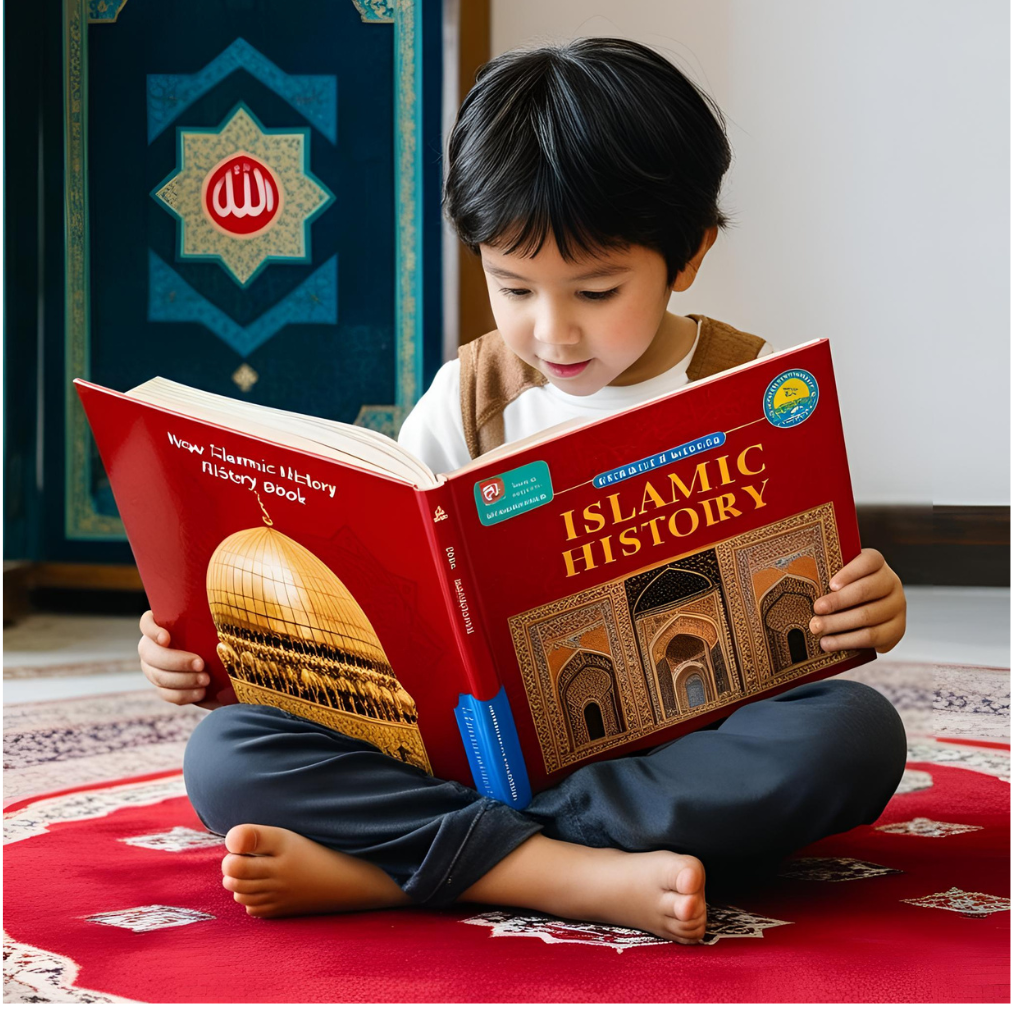

The Golden Age was the peak of intellectual creativity. It produced famous figures like Ibn Sina, Al-Khwarizmi and Ibn al-Haytham. But the most important question is not what they achieved, but how Muslim societies could produce so many innovators in the first place. Creativity rarely emerges from isolated geniuses. We all have the capacity to learn, create and innovate, but the conditions must be right. This is through society establishing institutions, incentives and a shared value system which produces talented people. This article looks at religiously driven knowledge production in the Abbasid Golden Age, and how it fuelled creativity.