

Julaybib: The Companion Bullied for his Looks
بسم الله الرحمن الرحيم
In the Name of Allah, the Most Gracious the Most Merciful
Julaybib رضي الله عنه was a unique companion of the Prophet ﷺ who was overlooked in society. Judged for his appearance and alienated by men, he nonetheless continued to strive for the sake of Allah سبحانه و تعالى. As a result, he was honoured with martyrdom and the pleasure of the Noble Messenger ﷺ. In his brief story, he successfully transcended societal labels to prove that beauty does not define a person’s true character. His legacy provides timeless lessons about self confidence and how to respond to negative societal labels. This article analyses Julaybib’s story and what his life teaches about self image in the modern age.
Shunned By Society
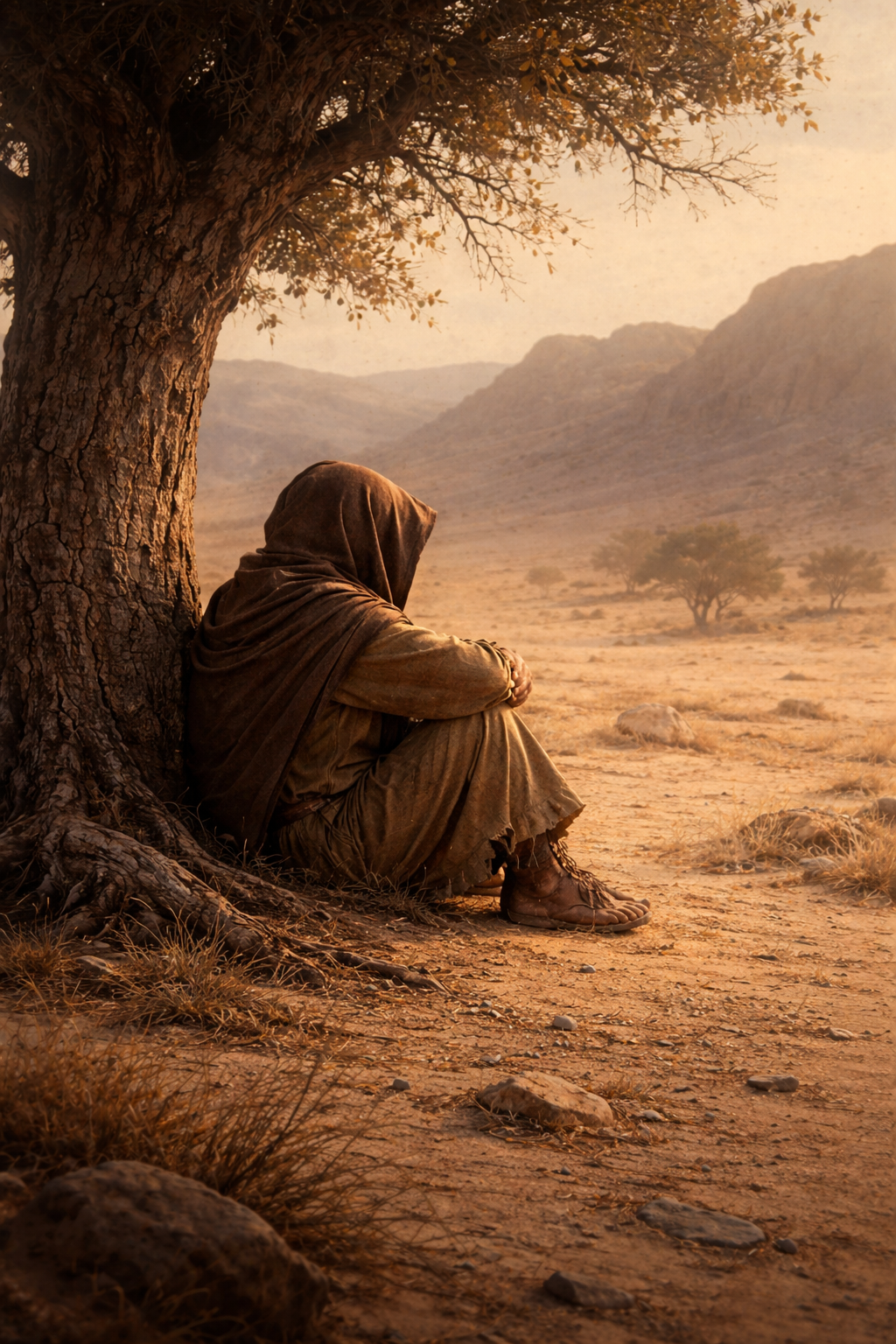
Julaybib’s name meant ‘small grown’, giving an indication he was short, often ridiculed for his physical appearance. His tribe was not known, meaning he could not expect any protection from a society operating on tribal networks. This earned him the ridicule of men and in some cases led to threats towards him.
A man from the Aslam tribe once told his wife: "Do not let Julaybib enter among you. If he does, I shall certainly do (something terrible to him)."
Due to the harassment from men, Julaybib used to take refuge in the company of women.
In contrast, The Prophet ﷺ showed Julaybib mercy, and was sensitive to his needs. He knew for Julaybib رضي الله عنه , no one would give him a wife.
One day the Prophet ﷺ went to an Ansari man and said "I want to have your daughter married."
"How wonderful and blessed, O Messenger of God and what a delight to the eye (this would be)," replied the Ansari man with joy and happiness.
"I do not want her for myself," added the Prophet.
"Then for whom, O Messenger of God?" asked the man.
"For Julaybib," said the Prophet.
The Ansari man replied: "I will consult with her mother."
He later told his wife. "The Messenger of God, may God bless him and grant him peace, wants to have your daughter married.”
She too was thrilled. "What a wonderful idea and what a delight to the eye (this would be)."
"He doesn't want to marry her himself but he wants to marry her to Julaybib.”
She protested: "To Julaybib! No, never to Julaybib! No, by the living God, we shall not marry (her) to him."
When the man got up to inform the Prophet ﷺ their daughter stepped out, enquiring who wanted to marry her. Her mother told her it was Julaybib at the request of the Prophet, and they would refuse on her behalf. The daughter was disturbed, questioning why they would reject an order from the Messenger of God, quoting Surah al Ahzab.
It is not for a believing man or woman—when Allah and His Messenger decree a matter—to have any other choice in that matter. Indeed, whoever disobeys Allah and His Messenger has clearly gone ˹far˺ astray.
She said: "I am satisfied and submit myself to whatever the Messenger of God deems good for me." As a result, the couple were married.
Battle and Martyrdom
The couple were newlyweds when Julaybib رضي الله عنه went on an expedition with the Prophet ﷺ. There was a fierce battle and Julaybib was martyred. When the battle was over, the Prophet asked his companions: "Have you lost anyone?"
They replied giving the names of their relatives and companions lost in the battle. When another group was asked, they said they had lost no one.
The Prophet said: “But Julaybib is missing! Search him amongst the martyrs”.
His Companions searched and found him beside seven dead polytheists’ whom he had killed.
The Prophet ﷺ approached and stood (by his side) and said: “He killed seven (persons). Then (his opponents) killed him. He is from me and I am from him.” This was repeated two or three times.
The Prophet held Julaybib in his blessed arms while the companions dug the grave, the Prophet took him and put him into the grave and he was buried.
He ﷺ supplicated for Julaybib’s widow: “O Allah! Shower blessings of goodness upon her and do not make her life that of difficulty (and toil)”.
As a result of the supplication, the woman had the best financial status from the Ansar. She spent like she never feared poverty.
Learning Lessons: Striving to Do Our Best
The story of Julaybib رضي الله عنه provides many lessons, namely striving to do our best in every situation. When we think of the Companions we rarely consider they had insecurities and suffered real life struggles we have today. Julaybib faced stigma over his height and looks, this affected his marriage prospects and created disdain towards him by others. Julaybib’s story proves that he was special in many ways. He had the attention and compassion of the Prophet ﷺ who looked for him in the battlefield when no one else did. This neglected person never stopped striving. He killed seven polytheists, aiding the cause of Islam.
It shows that societal labels do not define a person’s true character. He was a man society forgot on the basis of material standards - wealth, lineage, looks - but no one considered piety. Julaybib رضي الله عنه was exemplary because he ascended these standards. He still accompanied the Prophet ﷺ in battle and fought valiantly, showing from this one incident that he was someone who did his best, regardless of the circumstances. In return, he was honoured with martyrdom. His life proved that it’s gaining the pleasure of Allah and His Messenger that counts - whether society overlooks a person is irrelevant.
Similarly, the Ansari daughter showed that true happiness is through adherence to the Quran and Sunnah. In contrast, her parents' happiness was affected by how society perceived Julaybib رضي الله عنه . This demonstrates that the correct worldview is to submit to Allah and His Messenger. This is the lens in which people should be viewed.
Julyaybib was recommended by the Prophet ﷺ, meaning he must be of sound character and a source of goodness. It was this understanding in which the girl submitted to the command of the Messenger.
That is Tawhid (Monotheism) and excellence (ihsan) which is the key to being successful.
The daughter's piety caused the Prophet to supplicate for her, and she was blessed with financial security. It shows us that when we obey Prophetic guidance, we don't need to chase happiness, happiness chases us.
Situation Today: The Power of Self Image
In the modern world, societal labels have not evolved. Beauty, wealth and lineage remain the standard of how to frame others, and it is the lens in which one becomes praiseworthy or lowly.
However, negative societal labels are no longer just pointed at others, but are now pointed at ourselves. This is our self image which shapes our identity and how we engage with the world. When our self image is negative, it distorts our mental and psychological state, affecting our relationship with oneself.
In a social media age, self image has become a fixation. Young people are pressured to refine and alter their bodies to meet Western-centric beauty standards. This puts us in an unprecedented time where our self image is constantly under attack.
In previous societies, one could not help if they weren’t considered beautiful. Now - our credit cards finance pricey cosmetic surgeries, chemists offer weight altering drugs like Ozempic to emulate thinness. Ordinary people are expected to adopt the lifestyle, aesthetic and appearance of the rich - using celebrity culture as the beauty standard. With the existence of face tuning apps and filters, both altering and adopting a new look has become easier.
As a result, young people are getting preventative botox to stop wrinkles - even when still in youth. Matrimonial and dating apps rely on photos to measure beauty - pressuring users to enhance their appearances in order to conform.
This has led to a self image collapse. Regular exposure to filtered and curated content leads to high anxiety, depression, self doubt and loneliness.
Social media influences its users to maintain an idealised self image. A study showed that 88% of women and 65% of men compare themselves to images on social media. (Psychology Today, 2024)
Adopting An Islamic Self Image
As Muslims we must reject toxic beauty standards that hurt our iman and body image. When we see our actions as a means of striving for Allah, we create a self image built on ‘Allah-centric’ ideals, aligned with spiritual values.
The story of Julaybib رضي الله عنه provides the antidote to feeling low about oneself. Instead of being limited by society, he strove to please Allah - shown through his martyrdom. The Prophet’s ﷺ reaction to Julaybib’s death proved that in the end he was judged for his commitment to Islam - not his appearance. This shows that when one aims to please Allah and His Prophet, a shunned person becomes exemplary. Therefore we should adopt a mentality of Tawhid in our affairs, in which goodness will follow wherever we are.
May Allah make us amongst those who adhere to the Quran and Sunnah and strive for excellence in all our affairs.
Research Resources
JazakAllahu khair for reading. Please benefit the ummah by sharing this knowledge. Feel free to download this article for offline reading or consult the bibliography below.
-
Alim.org Julaybib | Companion of the Prophet | Islamic History | Sahaba Story, Available at: https://www.alim.org/history/prophet-companions/56/
authenticseerah (2019) The Authentic Narrations about Julaybeeb (رضياللهعنه), 8 October. Available at: https://authenticseerah.com/2019/10/08/the-authentic-narrations-about-julaybeeb-%D8%B1%D8%B6%D9%8A-%D8%A7%D9%84%D9%84%D9%87-%D8%B9%D9%86%D9%87-3/
Psychology Today (2024) The Power of Self-Image, Leadership, Diversity, and Wellness blog, 20 November. Available at: https://www.psychologytoday.com/gb/blog/leadership-diversity-and-wellness/202411/the-power-of-self-image.



Barsisa had been a pious worshipper known for his devotion to Allah. His story is told by the People of the Book, whose life was ruined after falling into zina (unlawful sexual intercourse). His story is a cautionary tale on free-mixing and succumbing to Satanic desires. But what happens when society itself promotes zina?